
Lumps of Love

Elizabethan sonneteers love to play on different meanings of the word “love.” In this sonnet by Sidney, the love of the poet’s love, inspired by Love, prevents him from loving.1
Late tir'd with woe, ev'n ready for to pine,
With rage of love, I call'd my love unkind;
She is whose eyes Love, though unfelt, doth shine,
Sweet said that I true love in her should find.
I joy'd, but straight thus water'd was my wine,
That love she did, but lov'd a Love not blind,
Which would not let me, whem she lov'd, decline
From nobler course, fit for my birth and mind:
And therefore by her love's authority,
Will'd me these tempests of vain love to flee,
And anchor fast myself on Virtue's shore.
Alas, if this the only metal be
Of Love, new-coin'd to help my beggary,
Dear, love me not, that you may love me more.
And we all know that “love is not love which alters when it alteration finds, or bends with the remover to remove.”
Nowadays we do the opposite of the sonneteers and use the word “love” as little as possible in romantic settings. Just try writing a sonnet with the ugly modern words we’ve invented to deny love: “infatuation,” “limerence,” “new relationship energy.”
Clearly some of this denial is self-protection. It’s easier to say “I’ve never been in love” than to say “I loved her, and she didn’t love me.” “I was in love, and he only wanted my retirement savings” hurts more than “I was infatuated.” Or maybe you’re poly, and your partner is less threatened by hearing “NRE” than by hearing “I’m in love with someone else.” Just as we only get married after everything is perfect, we want love to be only a perfect love.

”Lust,” although less popular, is also a strong poetic word, and I think a useful concept. But many older books don’t even make this distinction; “love” may be a sexual obsession, even a predatory one, not accompanied by any desire for a lasting relationship or any care for the beloved’s well-being. By this definition, a serial killer might love his victim. If I’m a love lumper, do I really want to go that far?
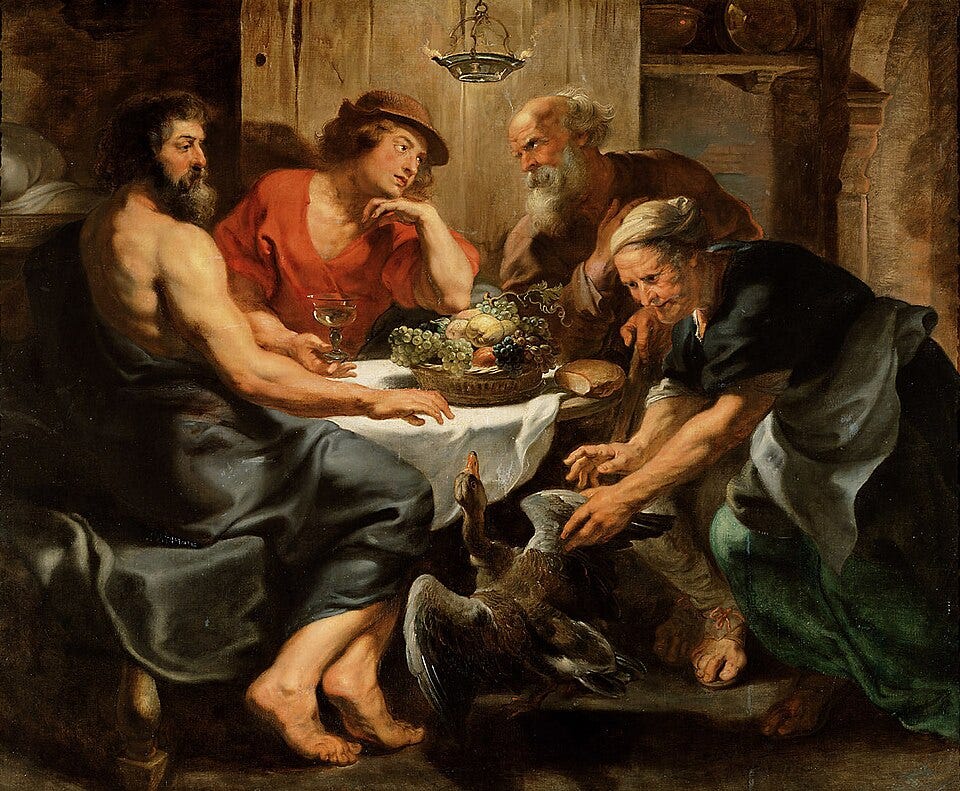
And yet, it’s highly traditional and well-established that love causes harm. The modern ideal of mutual love within marriage, that lasts forever, that does not lead to adultery or murder or suicide or God forbid a relationship with a teenager, seems like a special case of love rather than the typical case. Although classical examples of harmless love exist (Baucis and Philemon, Ceyx and Alcyone), they’re not central. Romeo and Lancelot are much more romantic than Leonard Lake, but their stories are about suicide and betrayal.
I said above that we are afraid of “love” in romantic settings. But we use the word quite promiscuously in other settings. Waiters and yoga teachers have declared their love for me. And it’s mandatory to tell children you love them, even every day, even when you’re angry at them. I was struck when reading George Eliot’s Scenes of Clerical Life (1858) to see that Milly Barton, the virtuous mother who dies young, has no words of love for her children. Instead, she reminds them of their duties.
It seemed as if Milly had heard the little footsteps on the stairs, for when Amos entered her eyes were wide open, eagerly looking towards the door. They all stood by the bedside—Amos nearest to her, holding Chubby and Dickey. But she motioned for Patty to come first, and clasping the poor pale child by the hand, said,—‘Patty, I’m going away from you. Love your papa. Comfort him; and take care of your little brothers and sisters. God will help you.’
Patty stood perfectly quiet, and said, ‘Yes, mamma.’
The mother motioned with her pallid lips for the dear child to lean towards her and kiss her; and then Patty’s great anguish overcame her, and she burst into sobs. Amos drew her towards him and pressed her head gently to him, while Milly beckoned Fred and Sophy, and said to them more faintly,—‘Patty will try to be your mamma when I am gone, my darlings. You will be good and not vex her.’
A mother today who never verbally declared her love for her children would be a monster. Milly Barton loves in deeds, not words, or maybe she doesn’t ever consider whether she loves her children (although the narrator is in no doubt she does). The love might go without saying, while the mother’s attention is on the many things she must do for the children. Did earlier mothers love less? Or do modern mothers love less, and use the words to replace the reality?
I think the words we use change with culture, while human nature is constant. Milly Barton didn’t have the cultural rule that mothers must say “I love you,” but she loved her children. We bend over backwards to find ways to avoid the taboo word, but we love.
Astrophil and Stella, Sonnet 62.